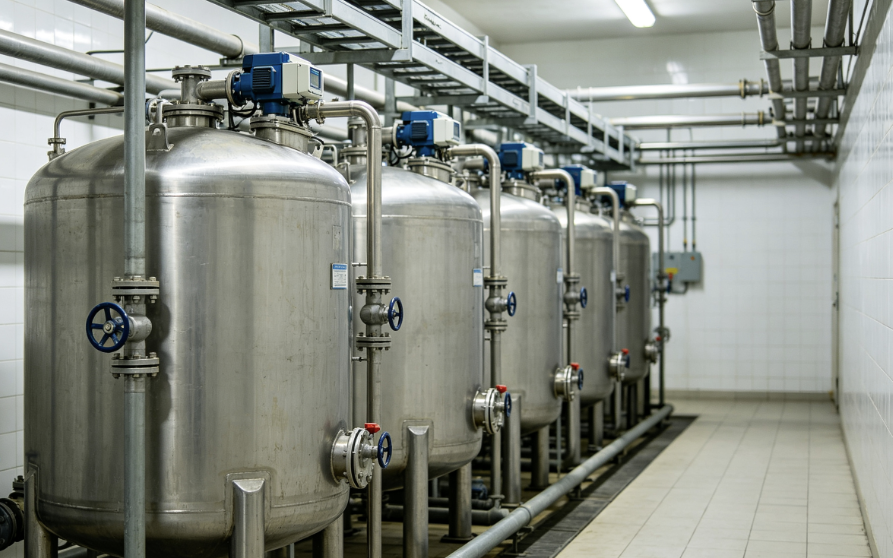
Advanced Mixed Bed Ion Exchange Resin Manufacturer: Comparing Volume Ratios for Power Plant Applications
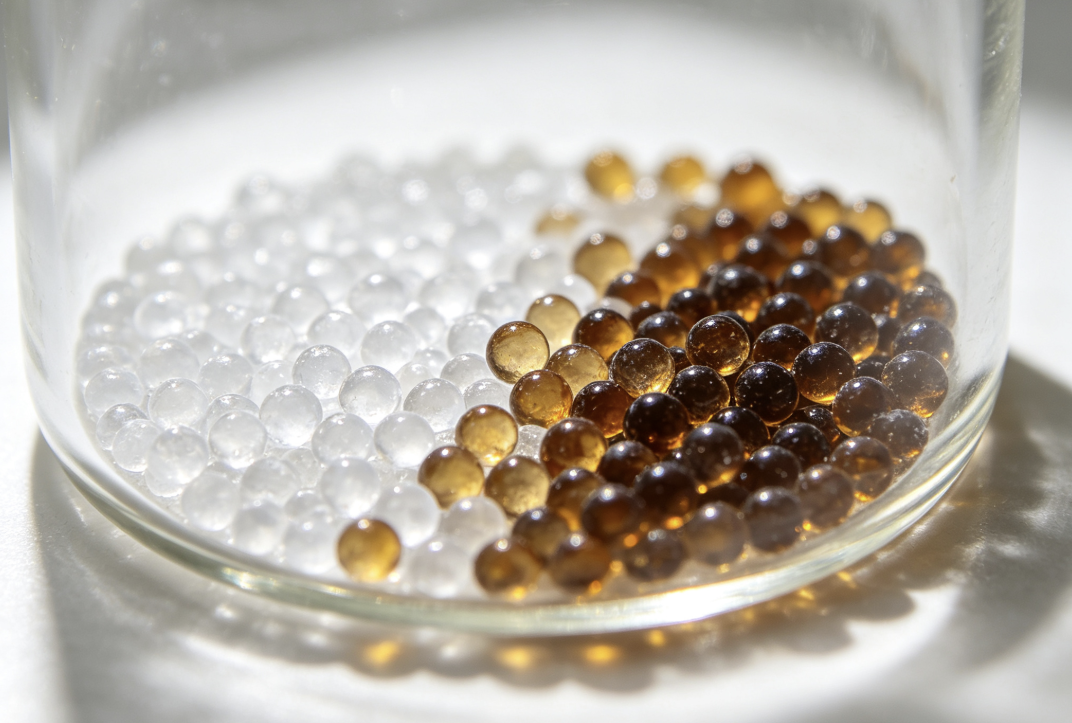
XIAN, SHAANXI, CHINA, September 29, 2026 /EINPresswire.com/ -- Power plant water treatment engineers face a recurring dilemma: boiler makeup water and condensate return streams demand purification, yet the two loops behave nothing alike. Makeup water arrives with a relatively stable, predictable ion load, while condensate carries corrosion products, conditioning chemicals, and occasional cooling water in-leakage that shift by the hour. Selecting resin for one loop rarely works for the other, and getting the cation-to-anion ratio wrong in either system tends to surface only after months of operation, in the form of drifting conductivity or shortened regeneration cycles. An <a href="https://www.seplite.com/mixed-bed-ion-exchange-resin/">Advanced Mixed Bed Ion Exchange Resin Manufacturer</a> approaches this problem by offering multiple ratio configurations rather than a single default product, and understanding why those ratios differ helps engineers match resin to the loop it actually needs to serve.
Two Water Loops, Two Different Resin Challenges
Boiler makeup water demineralization removes dissolved ions from raw or pretreated water before it ever enters the steam cycle. Condensate polishing, by contrast, treats water that has already circulated through turbines and condensers, picking up copper and iron corrosion products along the way. Seawater cooling systems introduce a particularly severe version of this problem, since condenser in-leakage can push chloride and sodium into the loop unpredictably. Conditioning chemicals such as ammonia, morpholine, and hydrazine add another layer of complexity, because these substances protect the circuit under normal operation but become contaminants the moment condensate purification equipment needs to strip them out. Makeup water treatment and condensate polishing therefore call for resin selected against very different performance criteria, even though both rely on the same underlying ion exchange chemistry.
Comparing Cation-to-Anion Ratios for Makeup Water Demineralization
For makeup water applications, SEPLITE® MB10IND offers a balanced 1:1 cation-to-anion ratio suited to feedwater with roughly even ionic loading. Plants drawing from sources with higher silica or carbonic acid content typically see better performance from SEPLITE® MB20IND at a 1:1.5 ratio, since the additional anion volume extends run length before silica breakthrough occurs. SEPLITE® MB30IND pushes further to a 1:2 ratio, favoring anion capacity for demineralization tasks where anion exchange represents the limiting factor in cycle length. None of these ratios outperforms the others universally; each simply matches a different feedwater profile, and selecting the wrong one tends to shorten regeneration intervals well before conductivity readings would otherwise flag a problem.
Where Ratio Selection Changes the Economics of Condensate Polishing
Condensate polishing introduces different priorities entirely. Ferric oxide removal efficiency becomes a central metric, with well-designed systems reaching removal rates of 95 percent or higher. Because copper and iron corrosion products dominate the contaminant profile in this loop, resin configuration for condensate service weighs particulate and colloidal removal alongside standard ion exchange capacity. Ammonia and morpholine tolerance also factor into ratio decisions here in a way that rarely applies to makeup water treatment, since these conditioning chemicals pass through the condensate loop continuously rather than appearing as occasional contamination events.
Bead Resin Mixed Beds vs. Powdered Resin Systems
Condensate polishing can rely on either high-speed bead mixed bed filtration or powdered-resin precoat systems, and the choice carries real operational consequences. Powdered-resin systems, precoated onto fiber filter elements, combine ultrafiltration and ion exchange functions in a single step, which reduces the equipment footprint substantially compared to bead resin trains. Lower capital investment and simpler operation make powdered-resin condensate polishing attractive for plants with space constraints, though bead mixed beds generally offer higher operating capacity for larger throughput requirements. Neither configuration is categorically superior; the decision depends on available space, capital budget, and the plant's specific condensate volume. Additional technical background on <a href="https://www.seplite.com/power-generation-and-condensate-polishing-3/">condensate polishing applications</a> covers these system-level trade-offs in more detail.
The Role of Inert Resin in Separating Cation and Anion Layers
One detail often overlooked in ratio-focused discussions involves the interface between cation and anion resin within the mixed bed itself. SEPLITE® IPA TB, a polyacrylic inert resin, sits between the cation and anion layers during regeneration, acting as a physical separator that reduces mixing at the boundary. This separation improves regeneration efficiency by allowing each resin type to be treated with its specific regenerant chemical more cleanly, which in turn supports more consistent post-regeneration capacity across cycles. For plants running frequent regeneration schedules, this separation layer contributes meaningfully to resin longevity even though it plays no direct role in ion exchange itself.
Matching Resin Configuration to Plant-Specific Water Chemistry
Generic ratio comparisons only go so far, because feedwater source, boiler pressure class, and conditioning chemical regime interact in ways specific to each plant. A facility using seawater cooling faces different condenser in-leakage risks than one using freshwater cooling towers, and higher-pressure boilers typically demand tighter conductivity control than lower-pressure systems. Engineers evaluating resin suppliers benefit from treating ratio selection as one variable within a broader water chemistry assessment, rather than defaulting to whichever product a supplier stocks most readily.
Production Control and Technical Support for Power Applications
Consistency across resin batches matters as much as the ratio itself, particularly for utilities operating under long-term supply contracts. Sunresin (Sunresin New Materials Co. Ltd.) maintains production control and quality control systems intended to hold batch performance within tight tolerances, supported by reliable EPC and technical service capabilities for power industry clients. Sunresin New Materials Co. Ltd. positions its ratio flexibility and technical support as complementary rather than separate offerings, since ratio customization delivers less value without the production consistency to back it up over years of operation.
A Comparison Checklist for Power Plant Engineers
Engineers evaluating mixed bed suppliers for power applications can ask a few pointed questions before committing to a product line. Does the manufacturer offer multiple cation-to-anion ratios, or only one standard configuration regardless of feedwater chemistry? Is contaminant-specific removal data, such as ferric oxide removal rates, available for condensate polishing products? Does the supplier provide inert separator resin for mixed bed regeneration, and can technical staff explain how ratio selection should shift based on cooling water source? Suppliers able to answer these questions with data, rather than general reassurance, tend to hold up better across multi-year power plant contracts.
Supporting Power Industry Water Treatment Projects
Selecting the right resin configuration for boiler makeup water or condensate polishing involves weighing feedwater chemistry, contaminant sources, and system economics together, not in isolation. Sunresin continues to develop mixed bed resin products across multiple ratio configurations, backed by production facilities and quality systems built to support consistent performance in demanding power generation environments. Further technical specifications, ratio comparisons, and project consultation are available at <a href="https://www.seplite.com/">https://www.seplite.com/</a>.
Two Water Loops, Two Different Resin Challenges
Boiler makeup water demineralization removes dissolved ions from raw or pretreated water before it ever enters the steam cycle. Condensate polishing, by contrast, treats water that has already circulated through turbines and condensers, picking up copper and iron corrosion products along the way. Seawater cooling systems introduce a particularly severe version of this problem, since condenser in-leakage can push chloride and sodium into the loop unpredictably. Conditioning chemicals such as ammonia, morpholine, and hydrazine add another layer of complexity, because these substances protect the circuit under normal operation but become contaminants the moment condensate purification equipment needs to strip them out. Makeup water treatment and condensate polishing therefore call for resin selected against very different performance criteria, even though both rely on the same underlying ion exchange chemistry.
Comparing Cation-to-Anion Ratios for Makeup Water Demineralization
For makeup water applications, SEPLITE® MB10IND offers a balanced 1:1 cation-to-anion ratio suited to feedwater with roughly even ionic loading. Plants drawing from sources with higher silica or carbonic acid content typically see better performance from SEPLITE® MB20IND at a 1:1.5 ratio, since the additional anion volume extends run length before silica breakthrough occurs. SEPLITE® MB30IND pushes further to a 1:2 ratio, favoring anion capacity for demineralization tasks where anion exchange represents the limiting factor in cycle length. None of these ratios outperforms the others universally; each simply matches a different feedwater profile, and selecting the wrong one tends to shorten regeneration intervals well before conductivity readings would otherwise flag a problem.
Where Ratio Selection Changes the Economics of Condensate Polishing
Condensate polishing introduces different priorities entirely. Ferric oxide removal efficiency becomes a central metric, with well-designed systems reaching removal rates of 95 percent or higher. Because copper and iron corrosion products dominate the contaminant profile in this loop, resin configuration for condensate service weighs particulate and colloidal removal alongside standard ion exchange capacity. Ammonia and morpholine tolerance also factor into ratio decisions here in a way that rarely applies to makeup water treatment, since these conditioning chemicals pass through the condensate loop continuously rather than appearing as occasional contamination events.
Bead Resin Mixed Beds vs. Powdered Resin Systems
Condensate polishing can rely on either high-speed bead mixed bed filtration or powdered-resin precoat systems, and the choice carries real operational consequences. Powdered-resin systems, precoated onto fiber filter elements, combine ultrafiltration and ion exchange functions in a single step, which reduces the equipment footprint substantially compared to bead resin trains. Lower capital investment and simpler operation make powdered-resin condensate polishing attractive for plants with space constraints, though bead mixed beds generally offer higher operating capacity for larger throughput requirements. Neither configuration is categorically superior; the decision depends on available space, capital budget, and the plant's specific condensate volume. Additional technical background on <a href="https://www.seplite.com/power-generation-and-condensate-polishing-3/">condensate polishing applications</a> covers these system-level trade-offs in more detail.
The Role of Inert Resin in Separating Cation and Anion Layers
One detail often overlooked in ratio-focused discussions involves the interface between cation and anion resin within the mixed bed itself. SEPLITE® IPA TB, a polyacrylic inert resin, sits between the cation and anion layers during regeneration, acting as a physical separator that reduces mixing at the boundary. This separation improves regeneration efficiency by allowing each resin type to be treated with its specific regenerant chemical more cleanly, which in turn supports more consistent post-regeneration capacity across cycles. For plants running frequent regeneration schedules, this separation layer contributes meaningfully to resin longevity even though it plays no direct role in ion exchange itself.
Matching Resin Configuration to Plant-Specific Water Chemistry
Generic ratio comparisons only go so far, because feedwater source, boiler pressure class, and conditioning chemical regime interact in ways specific to each plant. A facility using seawater cooling faces different condenser in-leakage risks than one using freshwater cooling towers, and higher-pressure boilers typically demand tighter conductivity control than lower-pressure systems. Engineers evaluating resin suppliers benefit from treating ratio selection as one variable within a broader water chemistry assessment, rather than defaulting to whichever product a supplier stocks most readily.
Production Control and Technical Support for Power Applications
Consistency across resin batches matters as much as the ratio itself, particularly for utilities operating under long-term supply contracts. Sunresin (Sunresin New Materials Co. Ltd.) maintains production control and quality control systems intended to hold batch performance within tight tolerances, supported by reliable EPC and technical service capabilities for power industry clients. Sunresin New Materials Co. Ltd. positions its ratio flexibility and technical support as complementary rather than separate offerings, since ratio customization delivers less value without the production consistency to back it up over years of operation.
A Comparison Checklist for Power Plant Engineers
Engineers evaluating mixed bed suppliers for power applications can ask a few pointed questions before committing to a product line. Does the manufacturer offer multiple cation-to-anion ratios, or only one standard configuration regardless of feedwater chemistry? Is contaminant-specific removal data, such as ferric oxide removal rates, available for condensate polishing products? Does the supplier provide inert separator resin for mixed bed regeneration, and can technical staff explain how ratio selection should shift based on cooling water source? Suppliers able to answer these questions with data, rather than general reassurance, tend to hold up better across multi-year power plant contracts.
Supporting Power Industry Water Treatment Projects
Selecting the right resin configuration for boiler makeup water or condensate polishing involves weighing feedwater chemistry, contaminant sources, and system economics together, not in isolation. Sunresin continues to develop mixed bed resin products across multiple ratio configurations, backed by production facilities and quality systems built to support consistent performance in demanding power generation environments. Further technical specifications, ratio comparisons, and project consultation are available at <a href="https://www.seplite.com/">https://www.seplite.com/</a>.
Sunresin
Sunresin
email us here
Legal Disclaimer:
EIN Presswire provides this news content "as is" without warranty of any kind. We do not accept any responsibility or liability for the accuracy, content, images, videos, licenses, completeness, legality, or reliability of the information contained in this article. If you have any complaints or copyright issues related to this article, kindly contact the author above.