

Custom Regenerable PFAS Resin From China: A Practical Guide for Utilities Facing New PFAS Limits
Media Customization Principles: Matching Resin Chemistry to Water Composition
Selecting treatment media demands matching polymer molecular design directly to incoming water characteristics. Conventional commodity adsorbents often suffer from rapid capacity loss when handling complex water streams containing background foulants. In contrast, engineered strong base anion exchange resin (SBA) formulations utilize specialized quaternary ammonium functional groups grafted onto macroporous polymer matrices. Adjusting the hydrophobic backbone balance and controlling pore size distribution within SEPLITE® resin architectures optimizes kinetic mass transfer rates. This precise chemical customization maximizes dynamic capacity for both mobile short-chain and hydrophobic long-chain PFAS compounds under actual field conditions.
Hydraulic sizing and column kinetics represent equally crucial components of system design. Facility engineers typically establish an Empty Bed Contact Time (EBCT) between 1.5 and 3 minutes when deploying high-selectivity ion exchange media. Operating at elevated linear flow rates ranging from 20 to 40 bed volumes per hour (BV/h) dramatically reduces total vessel volume requirements compared to traditional media beds. Smaller vessel footprints lower civil engineering costs, minimize plant real estate requirements, and simplify retrofits within existing treatment infrastructure. Consequently, customized media design provides a compact and hydrodynamically efficient solution for modernizing water treatment plants.
The Regeneration Protocol: Step-by-Step Desorption & Waste Minimization
Controlling long-term operational expenditure depends fundamentally on establishing robust regeneration protocols. Utility operators monitor column effluent to detect short-chain breakthrough, which routinely occurs ahead of long-chain saturation. Establishing strict operational bed volume limits ensures timely elution before regulatory discharge thresholds are exceeded. Deploying <a href="https://www.seplite.com/advanced-ion-exchange-technology-for-efficient-short-chain-pfas-removal/">advanced ion exchange technology</a> enables rapid chemical desorption of bound contaminants using optimized salt and solvent eluent formulations. This specialized chemical stripping process completely restores active exchange sites without causing physical degradation to the underlying matrix.
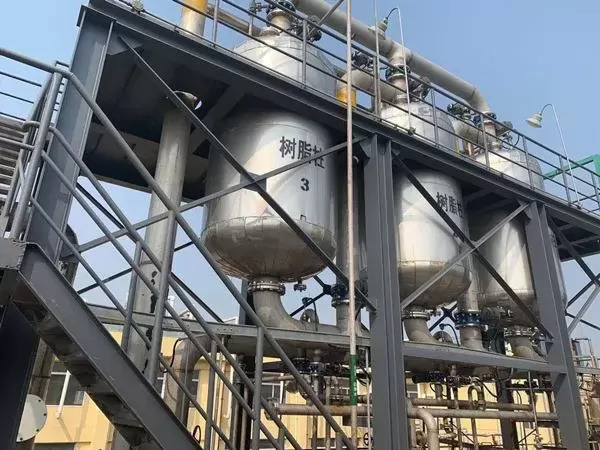
Minimizing secondary waste volume remains a paramount objective during regeneration system design. Modern automated regeneration plants incorporate closed-loop solvent recovery modules that execute efficient eluent distillation. These systems recover up to 95 percent or more of spent regeneration solvents for immediate reuse in subsequent elution cycles. As a result, the recovery process concentrates extracted PFAS molecules into an extremely small liquid waste stream. This dramatic volume reduction significantly decreases downstream hazardous waste destruction expenses, offering utility owners an environmentally responsible and financially sustainable remediation cycle.
Long-Term O&M Best Practices: Preserving Physical and Chemical Bead Integrity
Maintaining consistent treatment performance over multiple operational cycles requires strict adherence to physical and chemical maintenance protocols. The mechanical durability of ion exchange media determines its resistance to physical attrition and hydraulic compaction. High-quality synthetic resins maintain a whole-bead count of 93 percent or higher, effectively preventing bead breakdown during high-velocity liquid flow. Additionally, chemical regeneration introduces rapid osmotic pressure shifts across the polymer structure. Specifying resilient crosslinked bead matrices protects against physical fracturing during alternating treatment and desorption cycles.
Preventative operational measures also guard media beds against external fouling mechanisms. Incoming raw water frequently contains suspended solids, dissolved iron, manganese, or biological matter that block active resin pores. Installing adequate pre-filtration systems, such as multimedia filters or microfiltration units, shields the resin bed from physical clogging. Furthermore, implementing routine clean-in-place (CIP) wash regimens removes accumulated organic foulants and restores optimal mass transfer kinetics. These operational safeguards ensure that the resin bed retains its baseline exchange capacity across years of continuous operation.
Risk Mitigation in Procurement: Sunresin’s Turnkey EPC & Quality Assurance Framework
Transitioning from initial feasibility studies to full commercial deployment involves significant technical and financial considerations. Utility directors reduce project execution risks by partnering with fully integrated technology providers capable of delivering complete systems. Mobile skid-mounted pilot plants allow operating teams to validate custom resin formulations under actual site conditions before committing major capital expenditure.
As a global leader in separation technologies, <a href="https://www.seplite.com/sunresin-profile/">Sunresin (Sunresin New Materials Co. Ltd.)</a> operates advanced manufacturing facilities with an annual resin production capacity exceeding 50,000 cubic meters. Sunresin enforces rigorous quality management standards across all synthesis facilities, backed by international ISO certifications and a dedicated team of over 300 technical R&D specialists. Beyond media synthesis, Sunresin New Materials Co. Ltd. provides complete Engineering, Procurement, and Construction (EPC) services. Specialized engineering teams design custom modular skids, continuous ion exchange systems, and fully automated solvent distillation units. By managing the entire value chain—from initial polymer synthesis to final plant commissioning—Sunresin offers utility clients single-source accountability and verified system performance.
Practical Implementation Roadmap for Utility Engineers
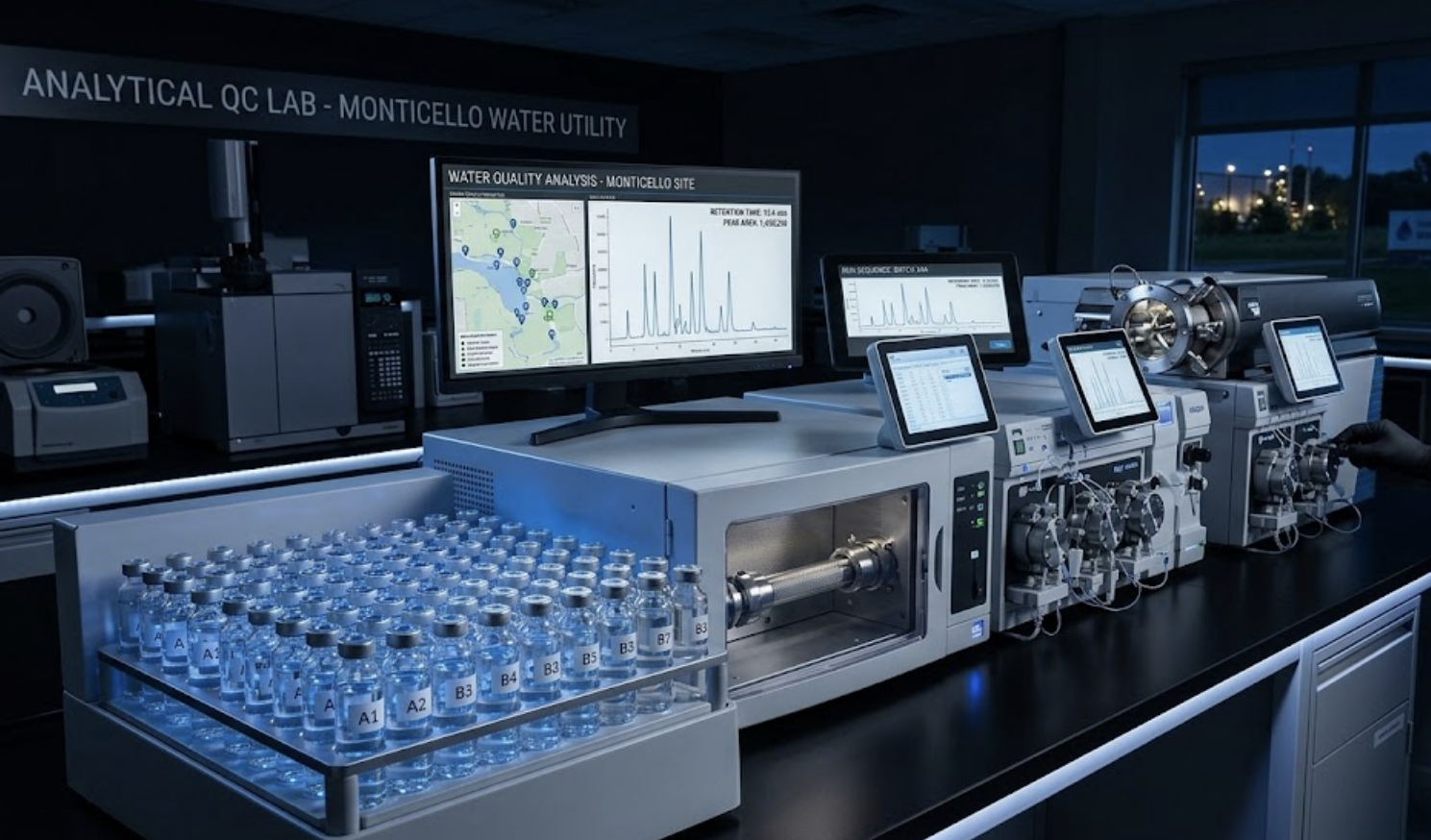
Upgrading water treatment infrastructure to satisfy stringent PFAS mandates requires a structured execution roadmap. Utility engineers should begin by conducting comprehensive water analysis, capturing seasonal variations in organic loading and background inorganic ions. Following water characterization, engineering teams collaborate with technology specialists to perform bench-scale column testing and generate detailed breakthrough curves. Deploying pilot skids on site further confirms target effluent levels and optimizes operational regeneration parameters.
Once pilot validation concludes, project managers proceed with detailed mechanical design, vessel footprint optimization, and facility integration. Utilizing modular equipment skids accelerates construction schedules and minimizes plant downtime during system retrofits. Facility operators seeking custom media formulations, pilot skid testing, or complete turnkey EPC consultation can initiate technical evaluations by visiting <a href="https://www.seplite.com/">https://www.seplite.com/</a>.
Sunresin
Sunresin
email us here
Legal Disclaimer:
EIN Presswire provides this news content "as is" without warranty of any kind. We do not accept any responsibility or liability for the accuracy, content, images, videos, licenses, completeness, legality, or reliability of the information contained in this article. If you have any complaints or copyright issues related to this article, kindly contact the author above.
