

Wooden Craft Kit OEM Manufacturing: From Product Concept to Retail-Ready Packaging
Understanding the standard project sequence helps buyers ask the right questions. A typical wooden craft kit OEM project moves through six stages:
Concept development and design brief
Structural design and quotation
Prototype sampling
Mass production with quality control
Packaging customisation and labelling
Worldwide delivery
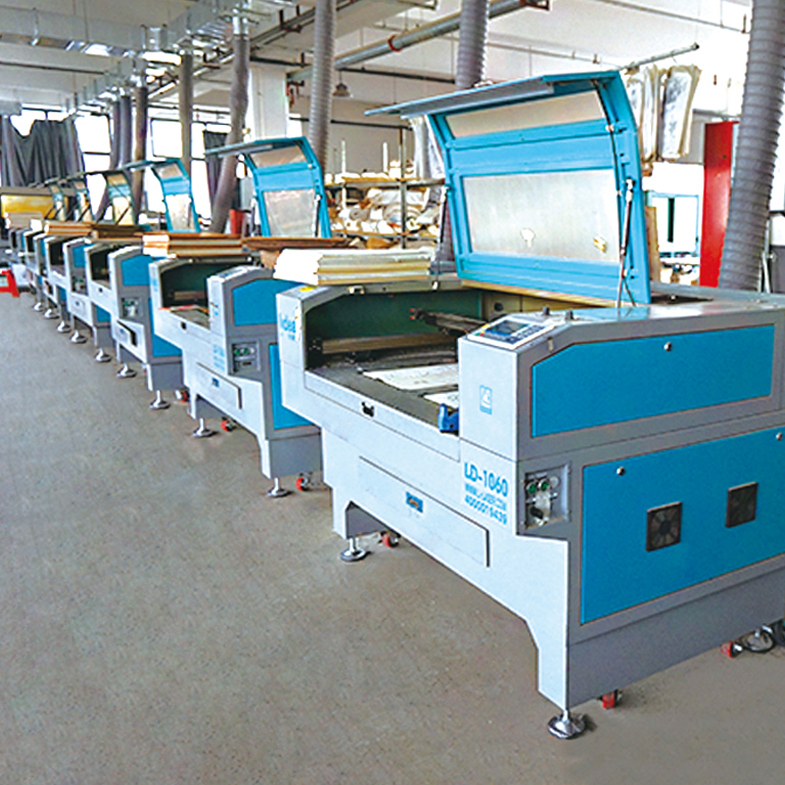
Each stage involves specific decisions that affect cost, timeline, and product quality. The sections below walk through each stage using the process followed by CraftODM, a wooden craft kit OEM based in Linyi, Shandong, China. With 16 years of experience, the company operates a 4,000+ sqm facility with an in-house team covering product design, laser cutting, UV printing, packaging, and QC.
Stage 1: Submitting a Design Brief to Your Wooden Craft Kit OEM Manufacturer
Every OEM project begins with a design brief. This can be as detailed as a full technical drawing or as simple as a reference image and a written description — what matters is that it gives the manufacturer enough information to assess whether the concept is producible and at what cost. Useful briefs typically include intended dimensions, preferred materials, assembly method, target retail price range, and any special features such as LED lighting or mechanical movement.
CraftODM's engineering team reviews the brief for manufacturability before the project moves to quotation — assessing whether the design can be laser-cut reliably, whether the proposed materials are appropriate for the intended use, and whether the assembly sequence can be documented clearly enough for an end consumer to follow. This evaluation also produces an initial estimate of sampling cost and timeline, so buyers can make an informed decision before committing to the next stage.
Having a portfolio of 3,000+ designs across miniature wooden crafts, 3D puzzles, educational toys, and custom wooden toys means the engineering team has a broad reference base to draw on. For buyers who arrive with a rough concept rather than a finished design, this cross-category experience helps identify potential structural issues early and speeds up the iteration process during sampling.
Stage 2: How Wooden Craft Kit OEM Factories Price and Engineer Your Design
Once the concept has been reviewed for manufacturability, CraftODM prepares a formal quotation covering tooling costs, sample fees, per-unit pricing, packaging costs, and estimated lead times. Having all cost components itemised at this stage gives buyers a clear picture of the full project investment before committing to sampling.
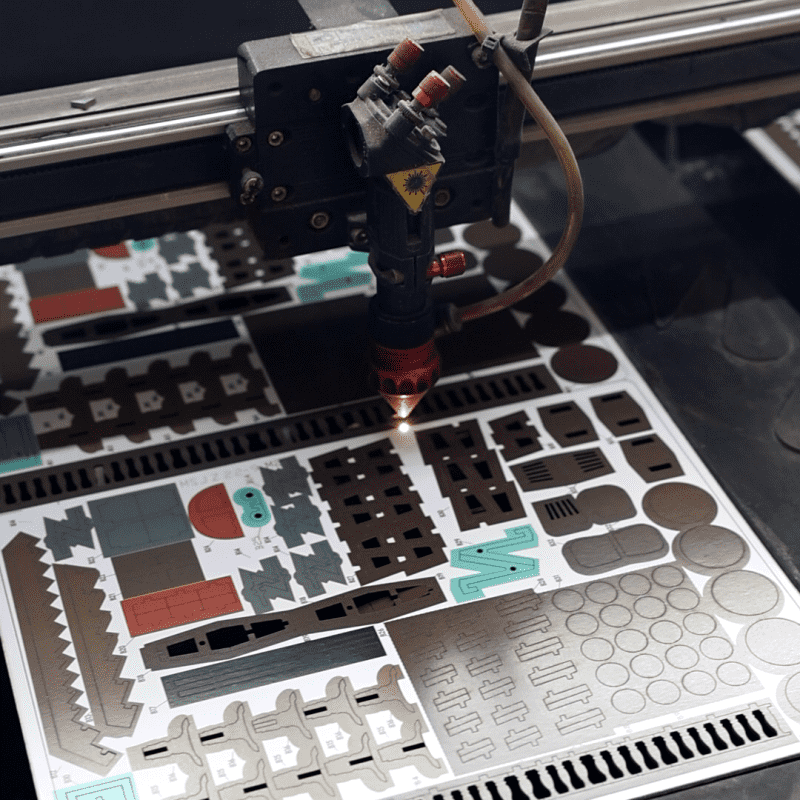
On the engineering side, CraftODM's structural team translates the buyer's concept into laser-cut patterns using CAD-based layout planning. Part nesting is optimised to minimise material waste and cutting time — a detail that affects per-unit cost at scale, even if it's invisible to the buyer in the final product.
Stage 3: Prototype Sampling for Custom Wooden Craft Kits — What to Expect
The first physical prototype is cut from basswood, poplar, or MDF depending on the product type — basswood for fine detail work, poplar where structural strength matters, MDF where a smooth UV-printed surface is required. FSC-certified material options are available for buyers with sustainability requirements.
Once cut, the sample is assembled in-house by the production team rather than a separate QA department. This matters because the people doing the assembly are the same ones who will run mass production — any fit issues or ambiguous assembly steps get caught and corrected at this stage rather than after bulk manufacturing begins. Instruction manuals are drafted and tested during the same process. For LED-integrated products such as miniature house kits, electrical components are tested for compliance before the sample is sent for buyer review.
Buyers review the prototype and submit revision requests. Once all adjustments are confirmed and the sample is signed off, it becomes the locked reference standard — the benchmark against which every unit in mass production is checked.
Stage 4: Mass Production and Quality Control
Once the buyer signs off on the sample, CraftODM's facility — with a monthly output of 300,000+ units — moves into bulk manufacturing. Laser cutting, UV printing, assembly, and packaging all run under one roof, which reduces the coordination overhead that comes with multi-supplier production chains.
Quality checks run at three points: incoming material verification before production begins, in-process inspection during cutting and assembly, and a final pre-shipment inspection before goods are packed for export. This sequence catches defects at the earliest possible stage rather than at the end of the line.
Certification testing is arranged based on the destination market. For EU-bound shipments: CE (EN71), REACH, RoHS, and EN IEC 62115 for LED-integrated products. For US market entry: ASTM F963, CPSIA, and CPC. Factory-level audit documentation — BSCI, SGS monitoring reports, and amfori — is available on request ahead of any purchase commitment.
Stage 5: Custom Packaging and Private Label Options for Wholesale Wooden Kits
Retail-ready packaging is handled in-house alongside the final production run. This includes custom-printed boxes with brand logo and product imagery, inner compartment organisation to keep parts separated during transit, illustrated instruction manuals, and UPC/EAN barcode labelling for retail distribution.
For buyers launching under their own brand, private-label support means the product arrives shelf-ready without requiring separate packaging design or print procurement on the buyer's side.
Stage 6: Worldwide Delivery
Once packaging is complete, finished goods are packed into export-grade cartons with full documentation — packing lists, commercial invoices, and compliance certificates. Having exported to 30+ countries across North America, Europe, and Oceania, CraftODM's team is familiar with the labelling requirements, documentation formats, and customs considerations that vary by destination market.
Conclusion
Of the six stages, sampling is where most project delays and quality disputes originate — it's the point where design assumptions meet physical reality. Buyers who treat sample sign-off as a checkpoint rather than a formality, and who ask for production updates at each stage rather than only at delivery, are in a much stronger position to receive a finished product that matches what was approved.
CraftODM handles all six stages under one roof — from design brief and structural engineering through laser cutting, packaging, and export documentation. More information on product capabilities and OEM/ODM services is available at https://www.craftodm.com/.
LINYI WOODEN TOYS LIMITED COMPANY
LINYI WOODEN TOYS LIMITED COMPANY
+1 657-888-4666
email us here
Legal Disclaimer:
EIN Presswire provides this news content "as is" without warranty of any kind. We do not accept any responsibility or liability for the accuracy, content, images, videos, licenses, completeness, legality, or reliability of the information contained in this article. If you have any complaints or copyright issues related to this article, kindly contact the author above.
