

Industrial Vision Gateways Market Poised to Reach USD 6.01 Billion by 2036 as Edge AI and Smart Manufacturing Reshape
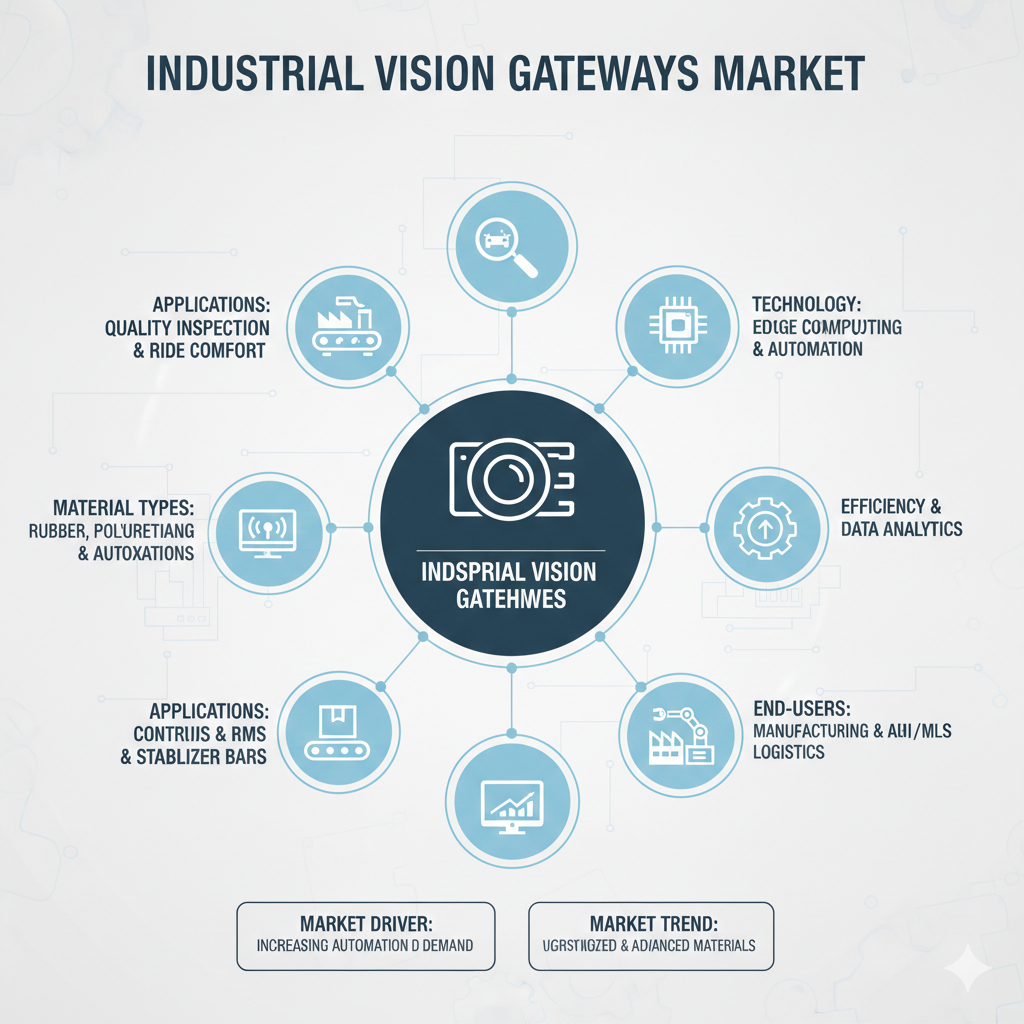
Industrial Vision Gateways Market
The global industrial vision gateways market sector is on track to achieve a valuation of USD 6.01 billion by 2036, at a CAGR of 8.2%
NEWARK, DE, UNITED STATES, February 13, 2026 /EINPresswire.com/ -- The global Industrial Vision Gateways Market is projected to reach USD 6.01 billion by 2036, expanding from USD 2.72 billion in 2026, reflecting a steady CAGR of 8.2% over the forecast period. According to Future Market Insights (FMI), this sustained growth is being fueled by rapid Industry 4.0 adoption, heightened regulatory compliance requirements, and the accelerating demand for automated quality inspection systems across manufacturing sectors worldwide.
As production environments become more complex and speed-driven, industrial vision gateways are evolving from simple data transmission devices into intelligent edge computing hubs capable of real-time analytics, adaptive decision-making, and safety monitoring.
Regulatory Momentum Accelerates Adoption
A major inflection point arrived in January 2026 with the enforcement of the European Union’s Machinery Regulation 2023/1230. The regulation mandates enhanced safety monitoring and real-time compliance reporting for automated production lines, prompting manufacturers across Europe to upgrade legacy systems.
Request For Sample Report | Customize Report | Purchase Full Report
https://www.futuremarketinsights.com/reports/sample/rep-gb-31963
Vision-enabled gateways now play a critical role in:
• Worker presence detection
• Hazard monitoring
• Equipment positioning validation
• Automated compliance documentation
The regulation has effectively shifted machine vision from a quality tool to a safety-critical infrastructure component.
Industry Leadership Perspective
Michael Chen, Director of Industrial IoT Strategy at Schneider Electric, commented:
“The integration of machine vision with edge computing gateways represents a fundamental shift in how we approach industrial automation. These systems are no longer just data collectors but have become intelligent decision-making nodes that can adapt to changing production conditions in real-time.”
This shift toward distributed intelligence marks one of the most transformative developments in industrial automation over the past decade.
Technology Advancements Redefining Performance
The year 2025 marked a technological breakthrough with the introduction of 5G-enabled vision gateways capable of achieving sub-millisecond latency. By 2026, industry focus pivoted toward AI-powered analytics integration, with vendors embedding neural processing units (NPUs) directly into gateway hardware.
Companies such as ADLINK Technology have expanded their Edge AI portfolios, introducing server-class systems specifically designed for industrial image processing workloads.
Meanwhile, Rockwell Automation launched OptixEdge in mid-2025, merging machine vision capabilities with industrial networking in a single edge gateway platform.
Supply chain disruptions experienced during 2022–2023 have largely stabilized, restoring component availability and pricing stability across 2025 and 2026. This normalization has accelerated capital investment cycles in automation upgrades.
Core Growth Drivers
1. Real-Time Quality Control
High-speed industries such as automotive and pharmaceuticals require instant defect rejection. Centralized processing introduces unacceptable delays, whereas edge-based gateways process images locally and trigger immediate corrective actions.
2. Regulatory Compliance
The EU Machinery Regulation and stricter FDA oversight in pharmaceuticals demand automated audit trails and traceability — capabilities inherently built into modern vision gateways.
3. Labor Shortages
Manufacturing labor shortages continue to pressure facilities to automate inspection roles traditionally handled by skilled technicians.
4. Distributed Vision Architectures
Manufacturers are shifting from centralized processing models toward distributed architectures, driving demand for more powerful gateway solutions capable of complex edge processing.
Segmentation Insights
Hardware Dominance – 58% Share
Hardware components account for approximately 58% of total revenue, driven by advanced processors, high-resolution sensors, and industrial networking modules.
Leading hardware innovators include:
• Cognex Corporation
• Teledyne Technologies
• Basler AG
Semiconductor content within gateways has increased by nearly 40% since 2024 due to AI chip integration and advanced imaging capabilities.
Manufacturing Applications Lead – 67% Deployment
Manufacturing remains the dominant application segment, particularly within automotive and electronics production.
Major adopters include:
• BMW Group
• Tesla
• General Motors
Applications span paint inspection, weld validation, battery cell inspection, and dimensional verification.
Similar Industry Reports
Industrial Machine Vision Market
https://www.futuremarketinsights.com/reports/industrial-machine-vision-market
Industrial Vacuum Cleaners Market
https://www.futuremarketinsights.com/reports/industrial-vacuum-cleaners-market
Industrial Robotics Market
https://www.futuremarketinsights.com/reports/industrial-robotics-market
Sudip Saha
Future Market Insights Inc.
+1 347-918-3531
email us here
Legal Disclaimer:
EIN Presswire provides this news content "as is" without warranty of any kind. We do not accept any responsibility or liability for the accuracy, content, images, videos, licenses, completeness, legality, or reliability of the information contained in this article. If you have any complaints or copyright issues related to this article, kindly contact the author above.
